
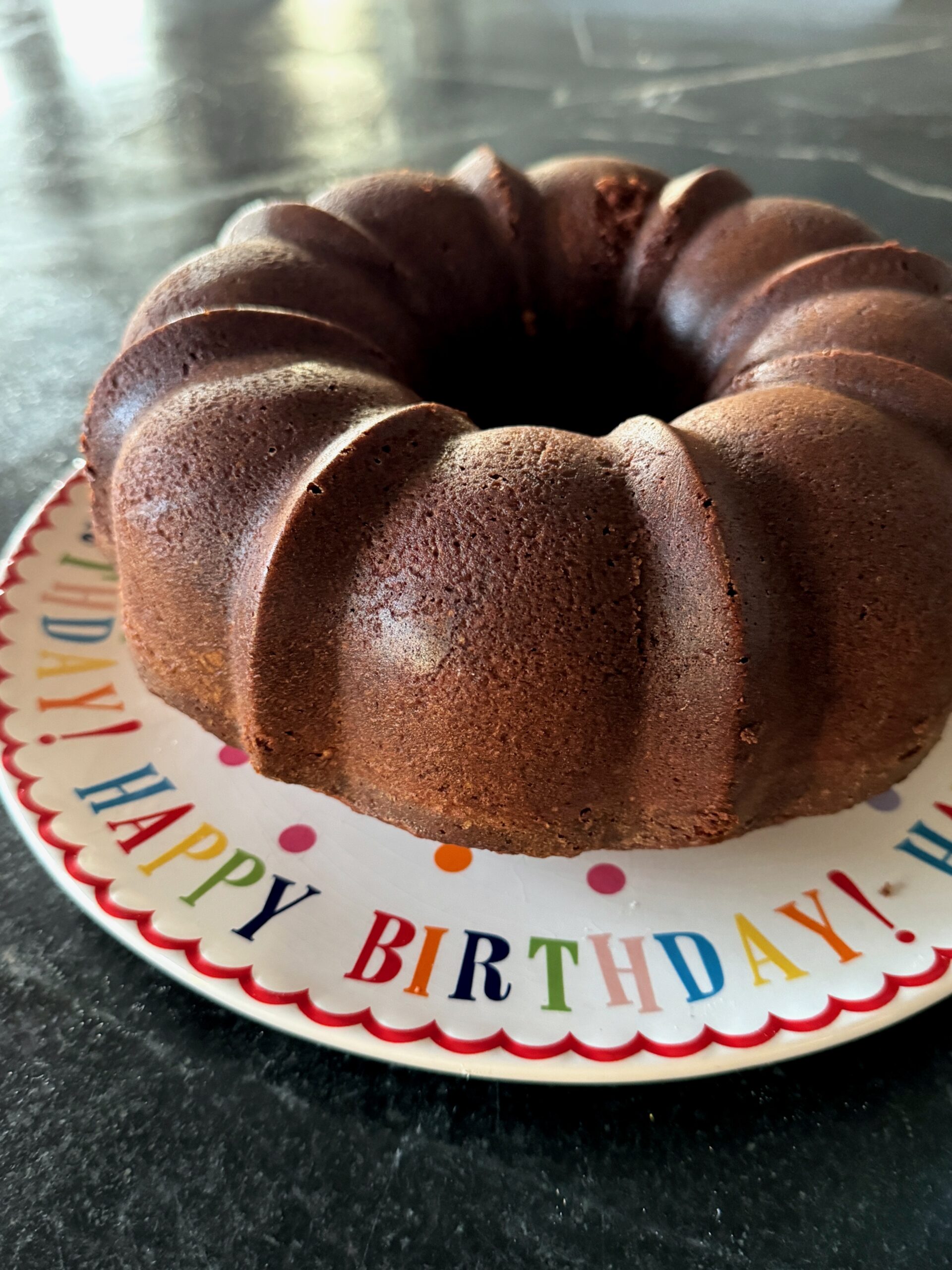
I spent my summer cleaning online house here, and I’m very excited to show you the new place. I built Chinese Grandma way back in 2010 and redesigned it in 2017, shortly before I fell into an abyss of health issues and spent several years navigating my way out. It took a minute, but I’ve finally returned to make my virtual home fresh and comfortable again. And don’t worry, I’m doing well now.
Life is a trip. We have so much to catch up on. But today, let’s just enjoy some pound cake.
The original idea of pound cake is charmingly simple: a pound each of eggs, butter, sugar and flour. Eggs provide the lift, butter the flavor, sugar the sweetness and flour the structure. No measuring cups or spoons, and no additional leavening needed, just elbow grease for beating the eggs. So smart. No recipe required.
But the world of people resists the simple. Why are there more pound cake recipes online than grains in a cup of sugar? Because you like lemon and I like vanilla. Because someone says a pound of butter is going to give you a heart attack. Because he wants his pound cake to be better than her pound cake. We love to tinker. We cannot resist the idea that better exists.
I can’t say that this is the best of all pound cakes. At some point, one simply has to make a choice. The most I can say for this recipe is that I’m never tempted to stray. It’s the perfect pound cake for me.
My mom wasn’t a baker, so our limited home baking when I was a child was cake mixes or Bisquick. So it was an absolute thrill for me when my mom’s friend Susan would occasionally bring her a freshly baked loaf of pound cake, a delicate but weighty treasure, as a thank-you gift. I marveled at the pure flavors of Susan’s home-baked loaf: slightly crisp crumbly crust, softly yellow and buttery interior, dense with sour cream richness and perfumed with vanilla and lemon zest. It was a cake that defied frosting: not needed and not wanted.
The truth is I don’t really have the patience to make perfect pound cake. The ingredients may be simple, but pound cake perfection calls for sifting the flour (Ina Garten does this three times, because she’s a queen), and depending on the recipe, other steps like separating eggs, or adding extra egg yolks, or beating egg whites until stiff, or whipping heavy cream, or browning butter.
I just want a delicious cake. Total crumb perfection is not worth the extra time for me.
This is a reliably great recipe. It won’t fail you if your technique is a little wobbly, or you make minor substitutions. I do this too, because I’m a make-do kind of cook.
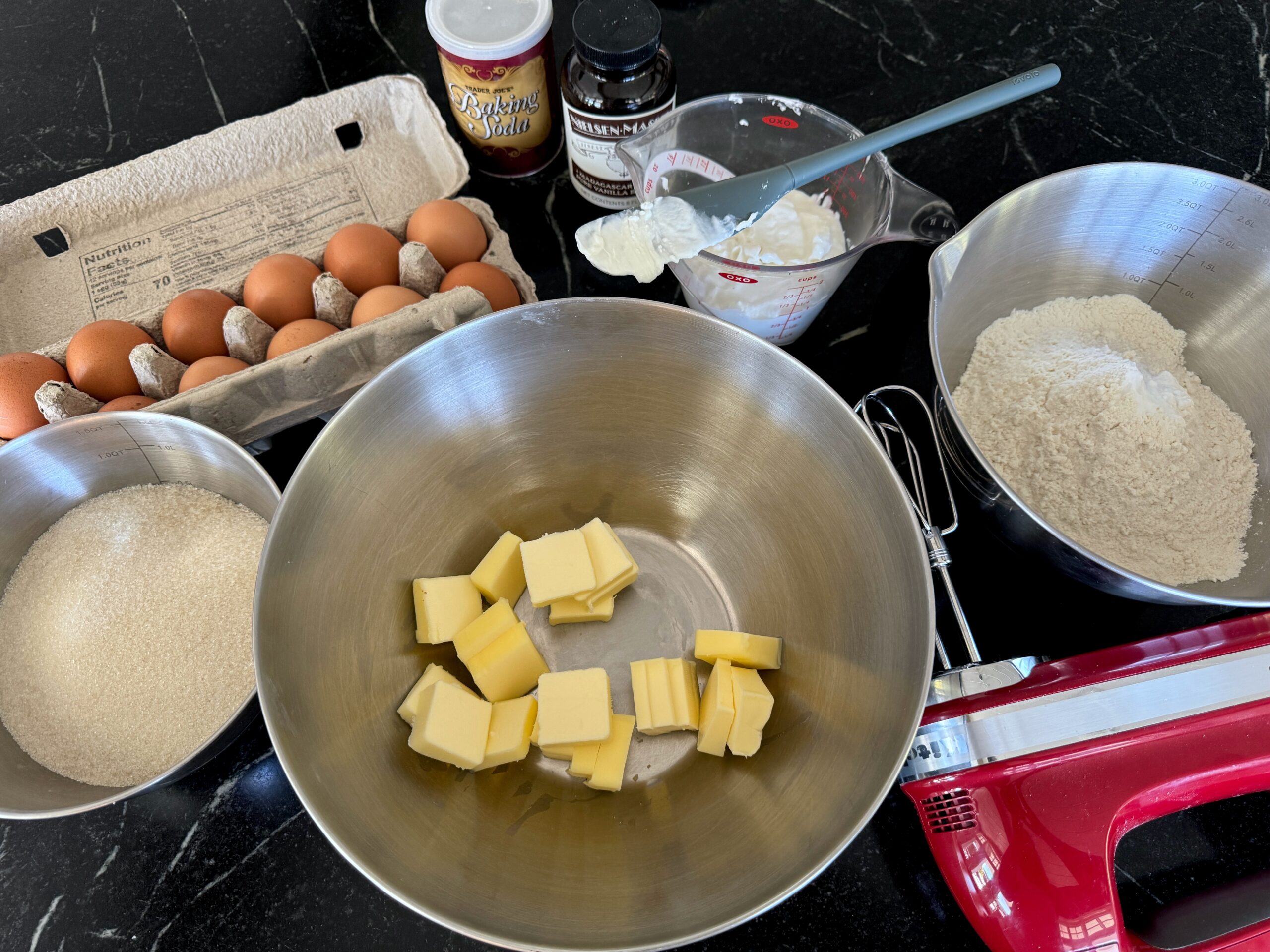
There isn’t an entire pound of butter in this recipe. Sour cream subs in for half the butter and also adds moistness and flavor. In my kitchen, sour cream always gets swapped for plain yogurt, which I always have on hand. This one is Greek. But the cake will work with regular plain yogurt, or even vanilla sweetened yogurt if that’s what you have. The chemistry still works.
This is one of the few recipes for which I pull out my electric mixer: I’m high tech in life but low tech in the kitchen. But hand mixing is insufficient for the even crumb of pound cake. Plus there’s no frosting under which to hide a lumpy cake surface.
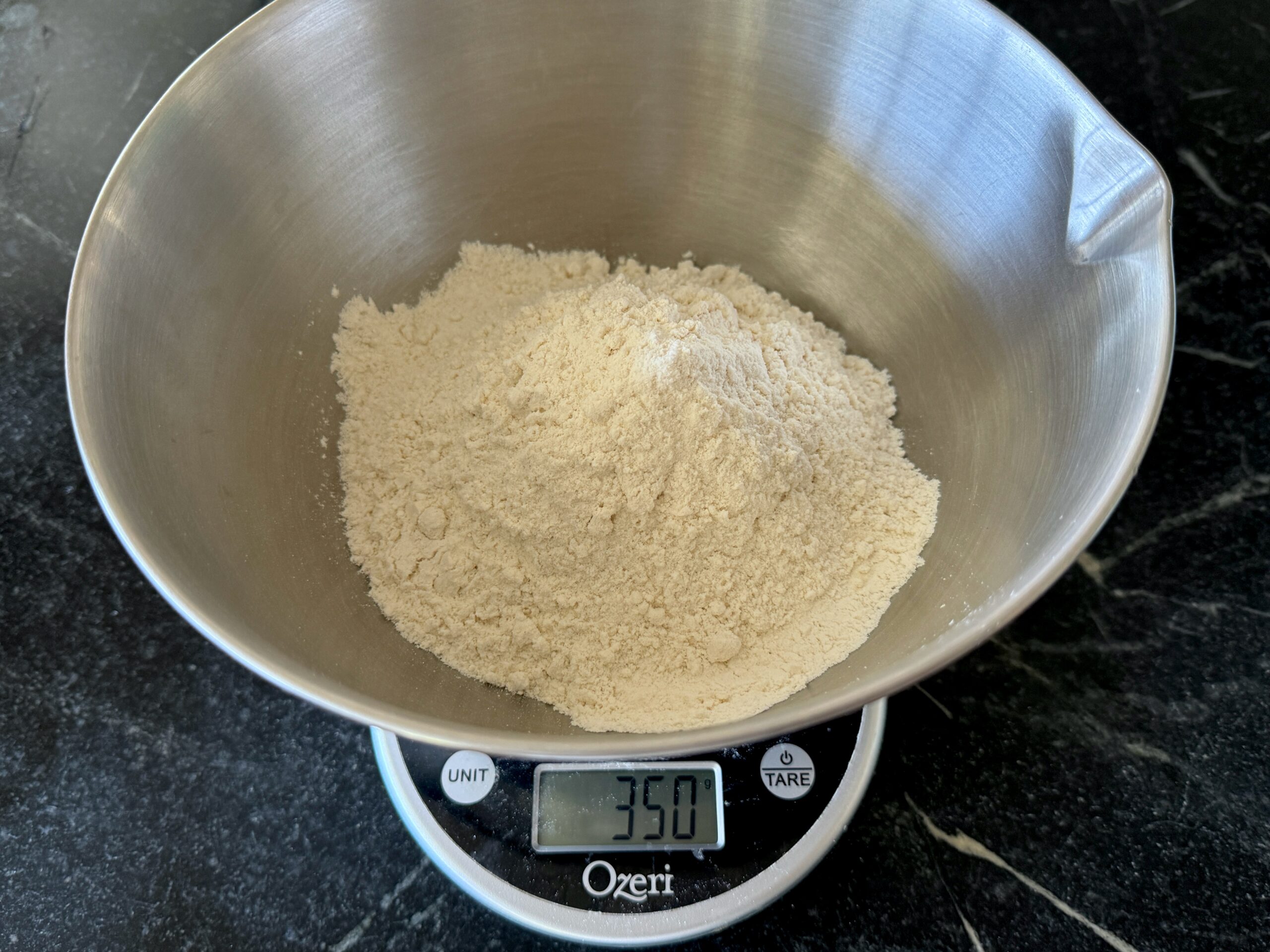
I’ve converted to the wisdom of the kitchen scale, which saves me having to wash measuring cups and spoons. But either works just fine.
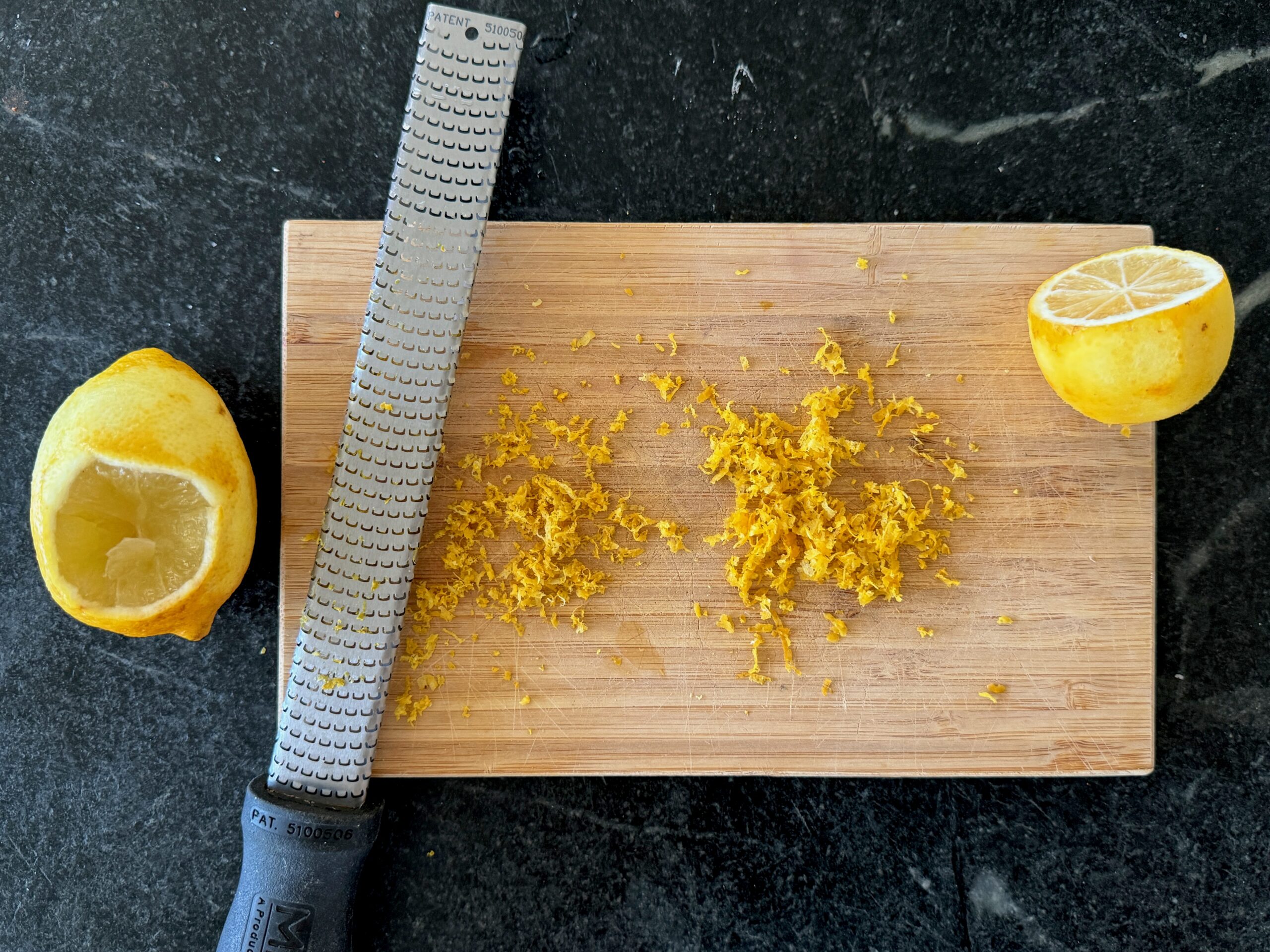
Zested half a lemon and part of a lime. Did you know if you leave limes on the tree long enough, they turn yellow? This is what happens at my house when I don’t realize I have limes growing, because they don’t really stand out from the leaves until they turn yellow.
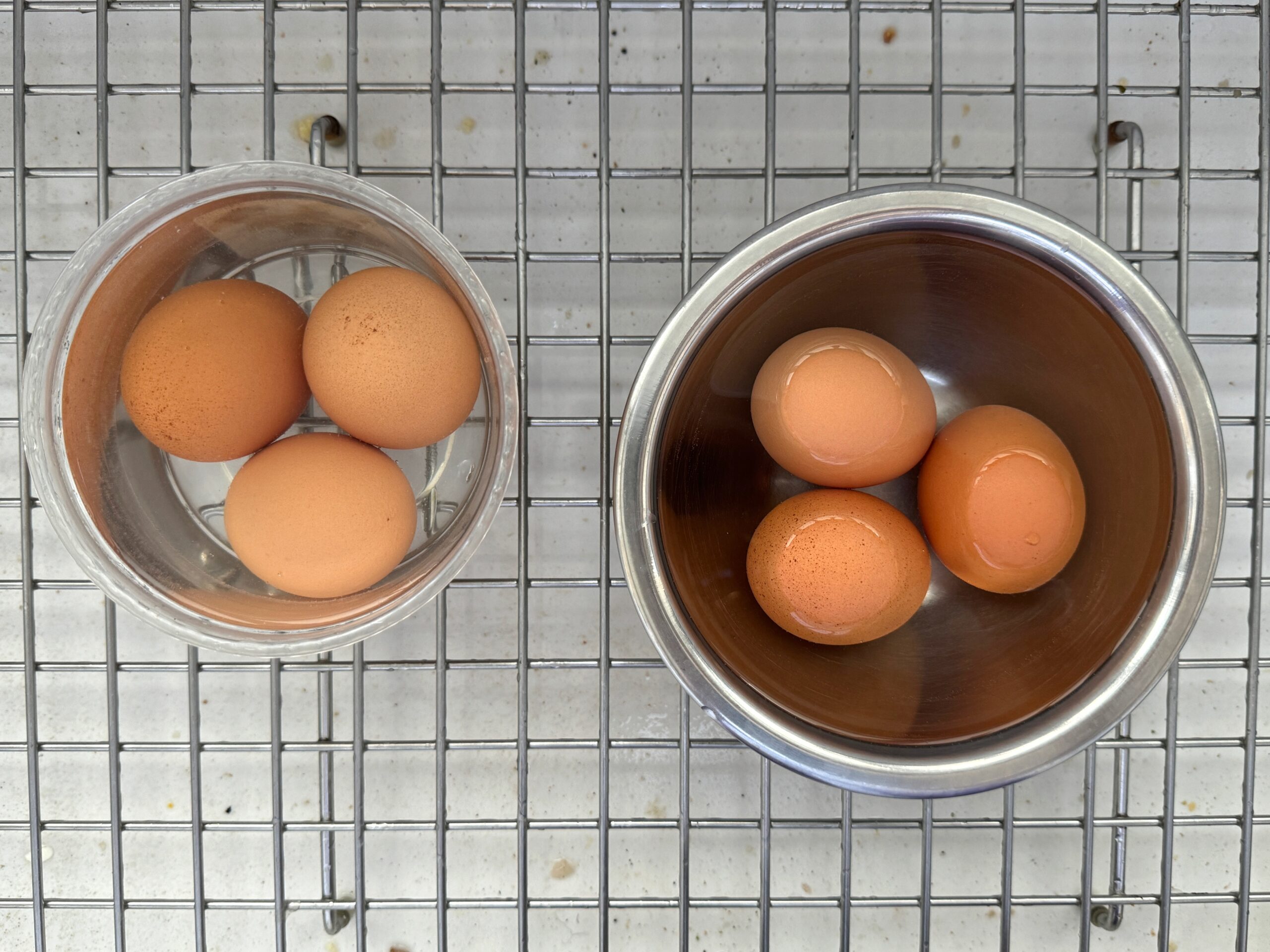
The important thing with pound cake is the butter and eggs have to be room temperature. You can rush cold butter along by cutting it into cubes. For cold eggs, you put them in a little hot water bath, which they find very relaxing.
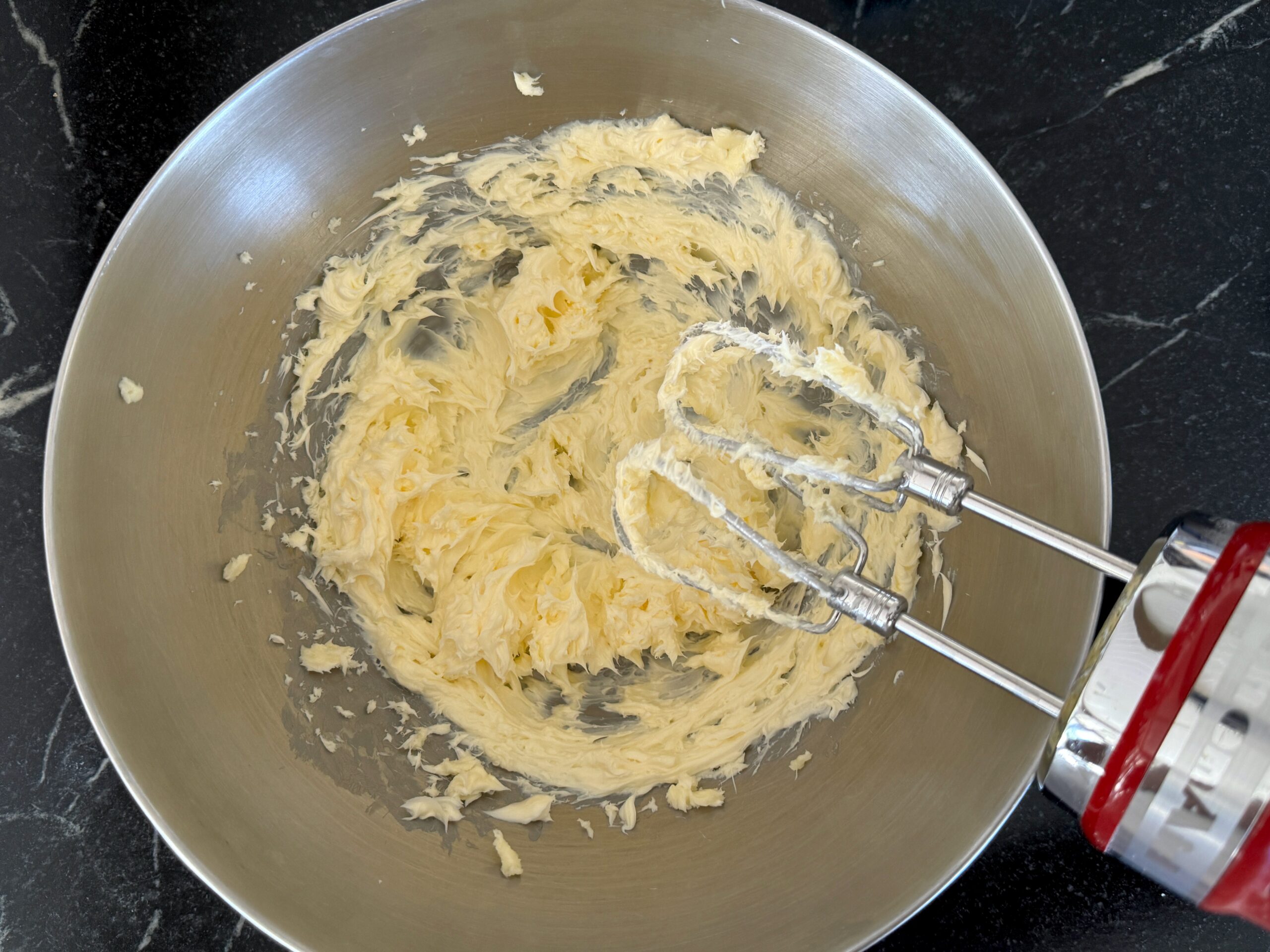
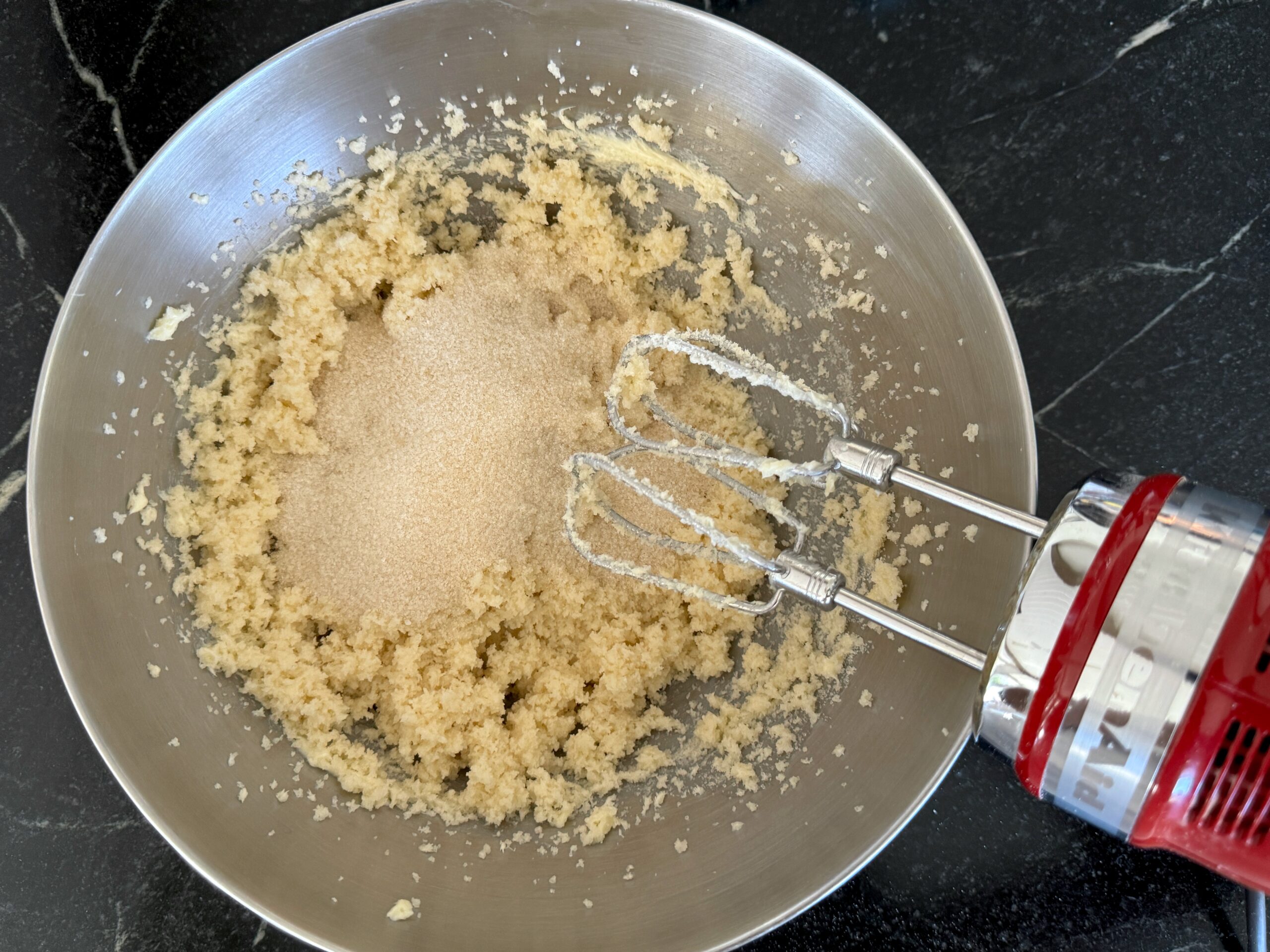
Creaming of the butter, sugar and eggs well is the important part of the process. Start with butter, then add sugar and vanilla. Add eggs in batches, mixing very well each time.
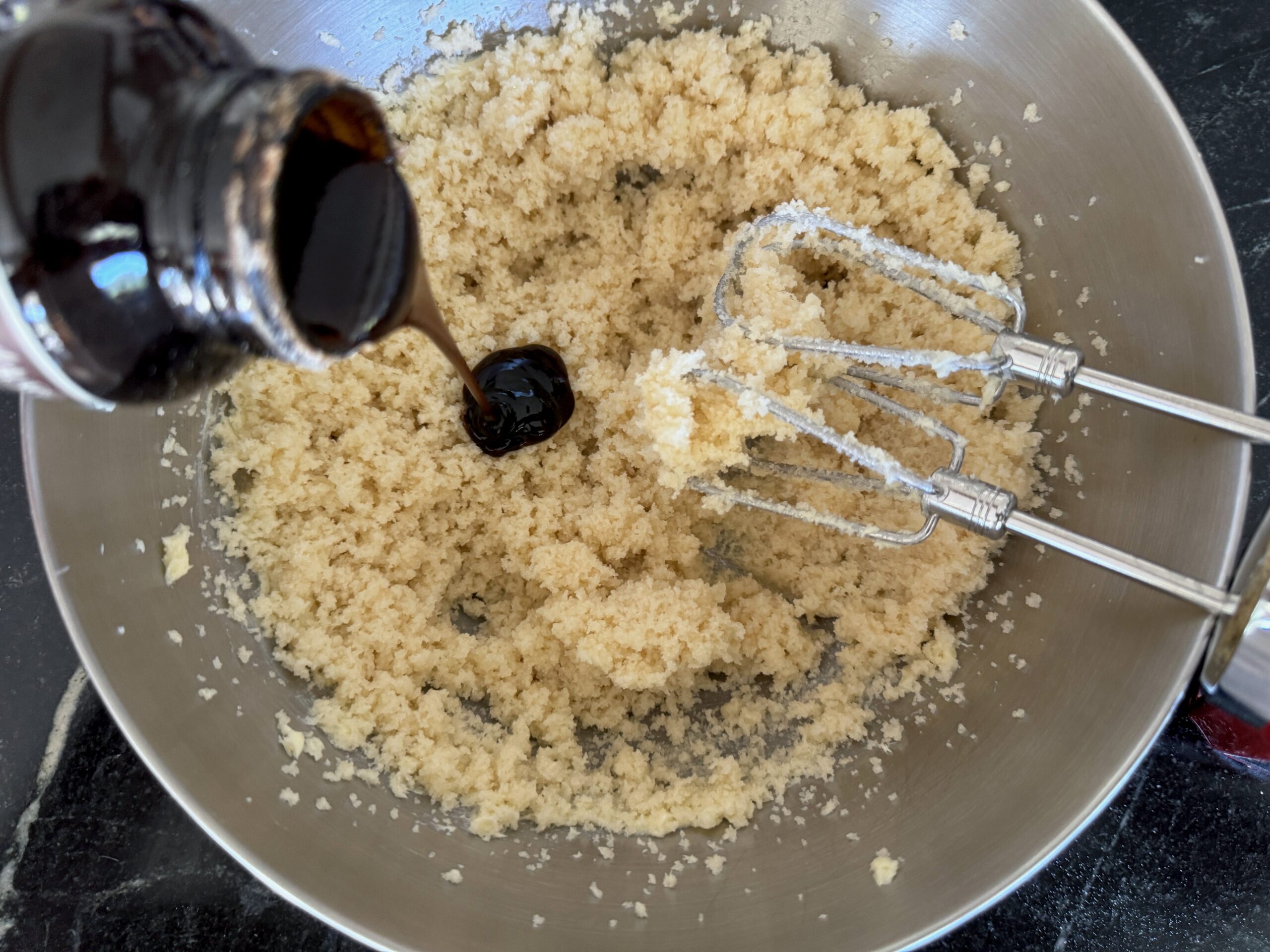
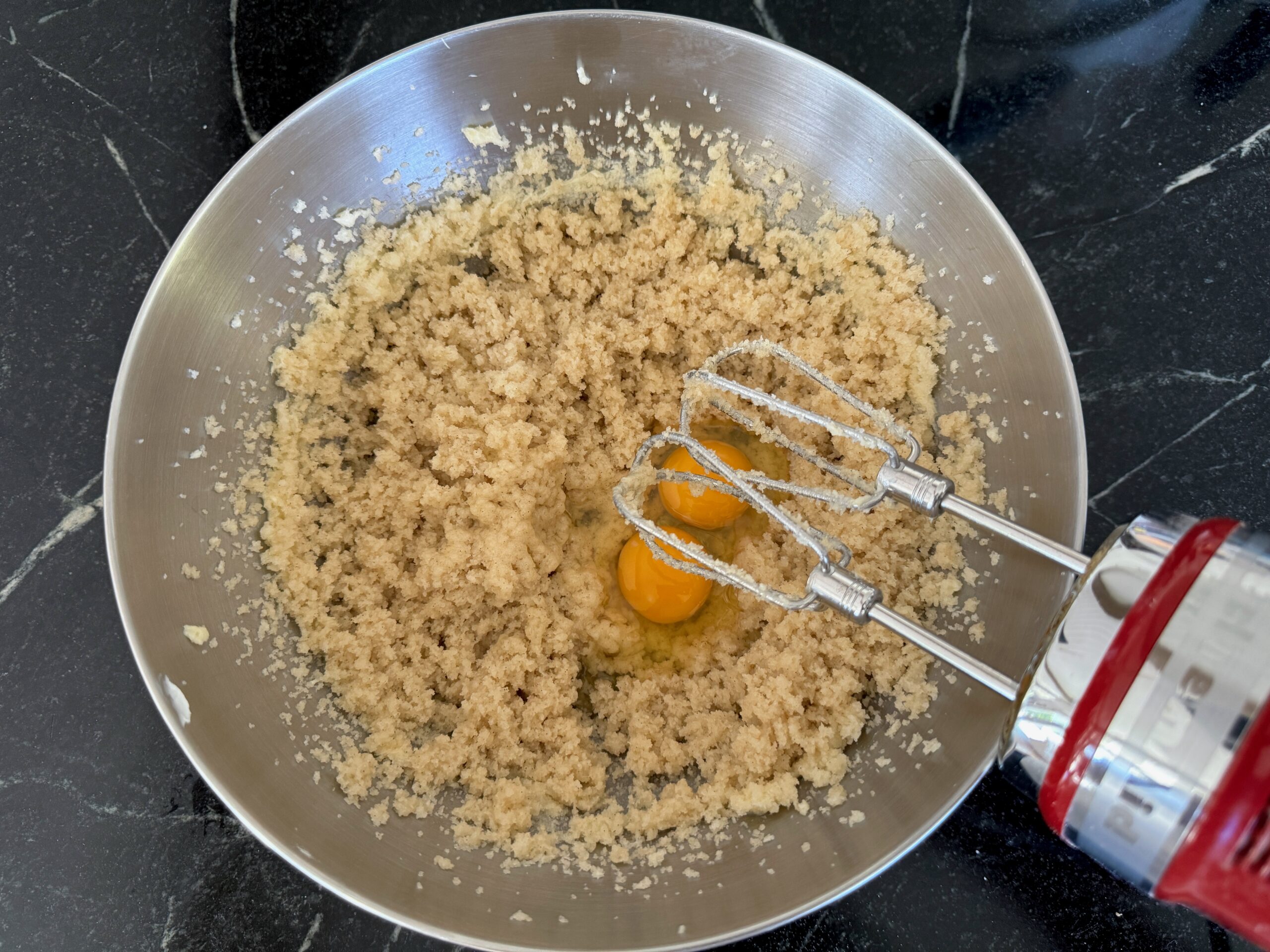
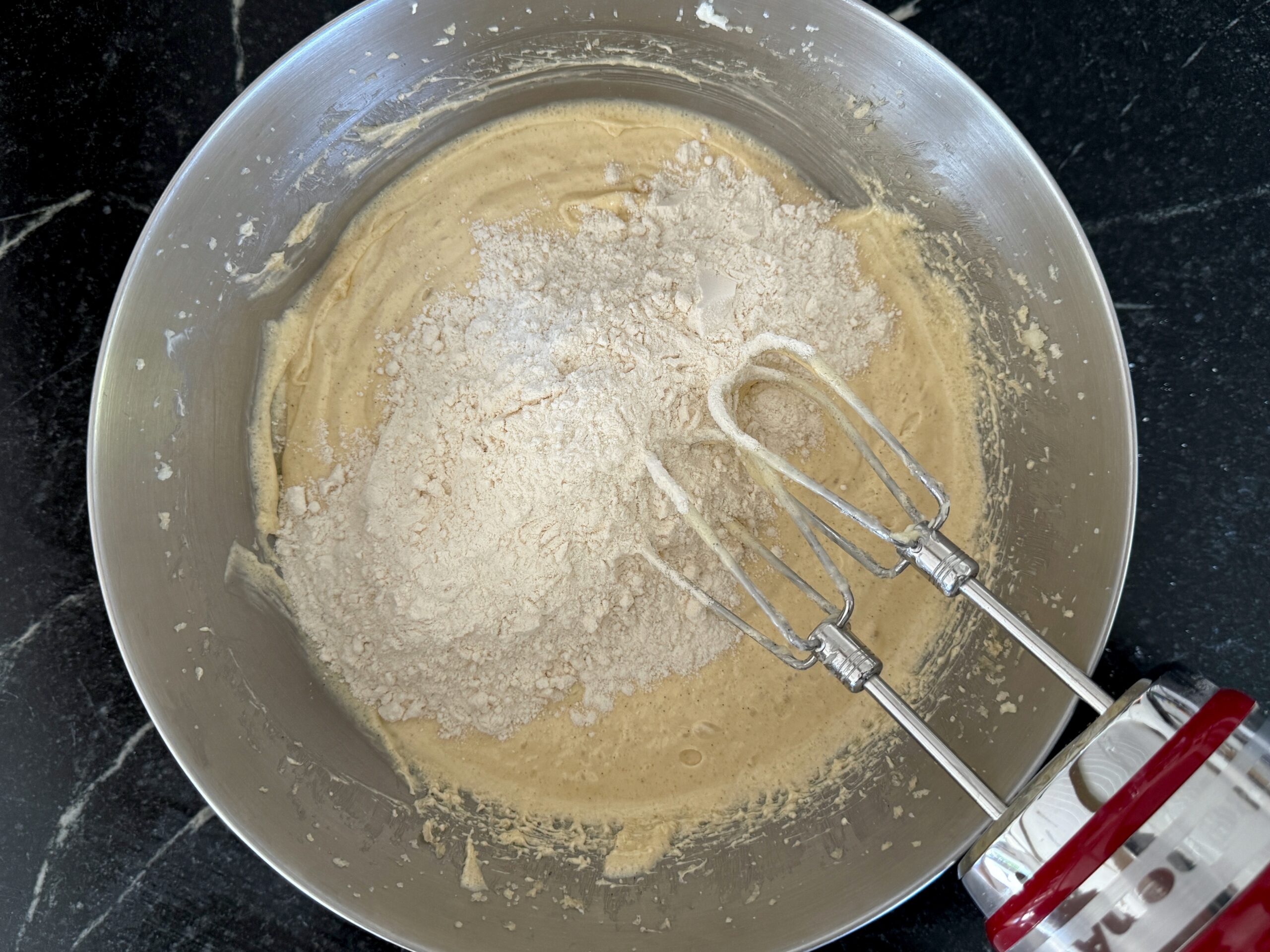
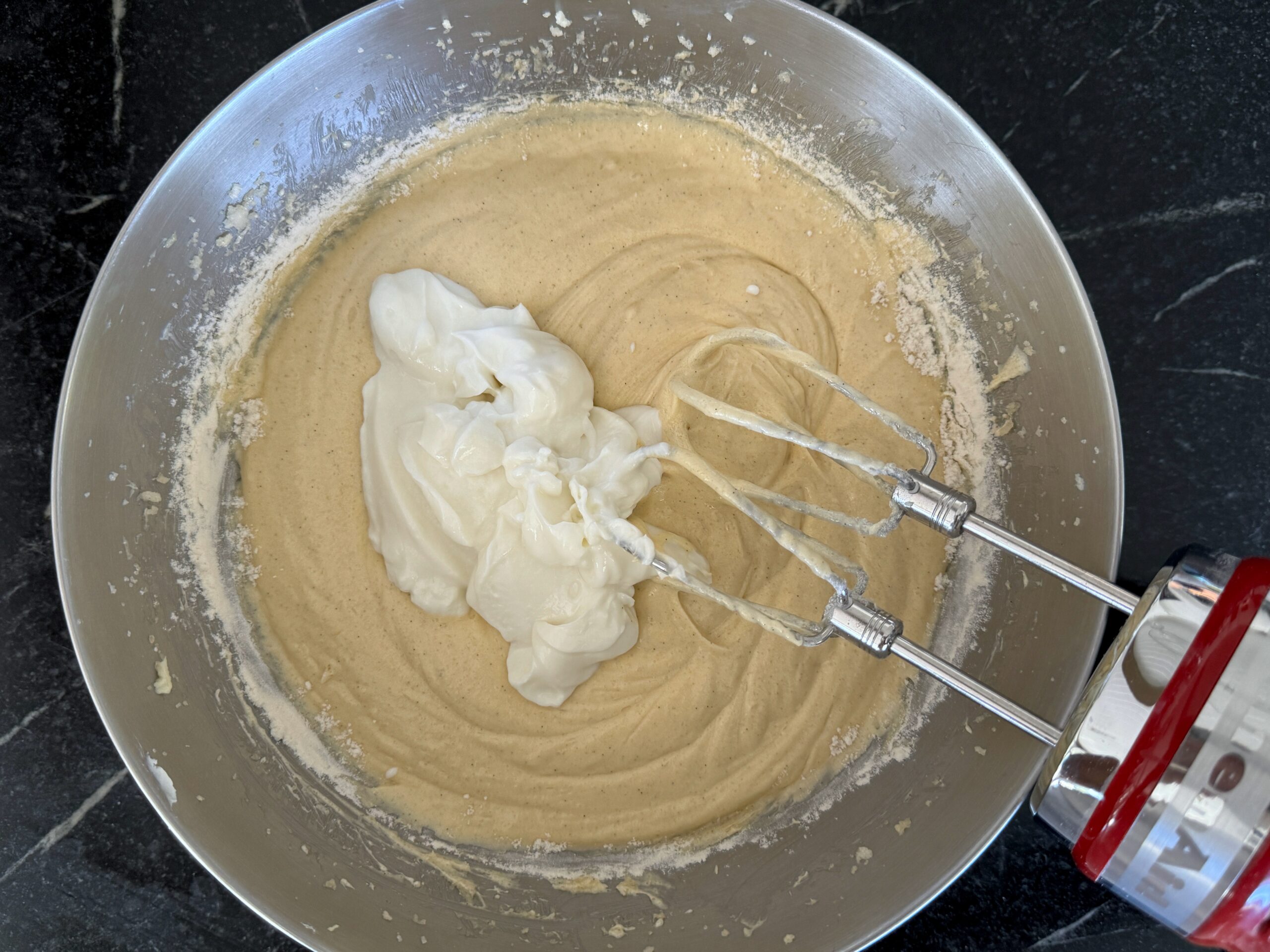
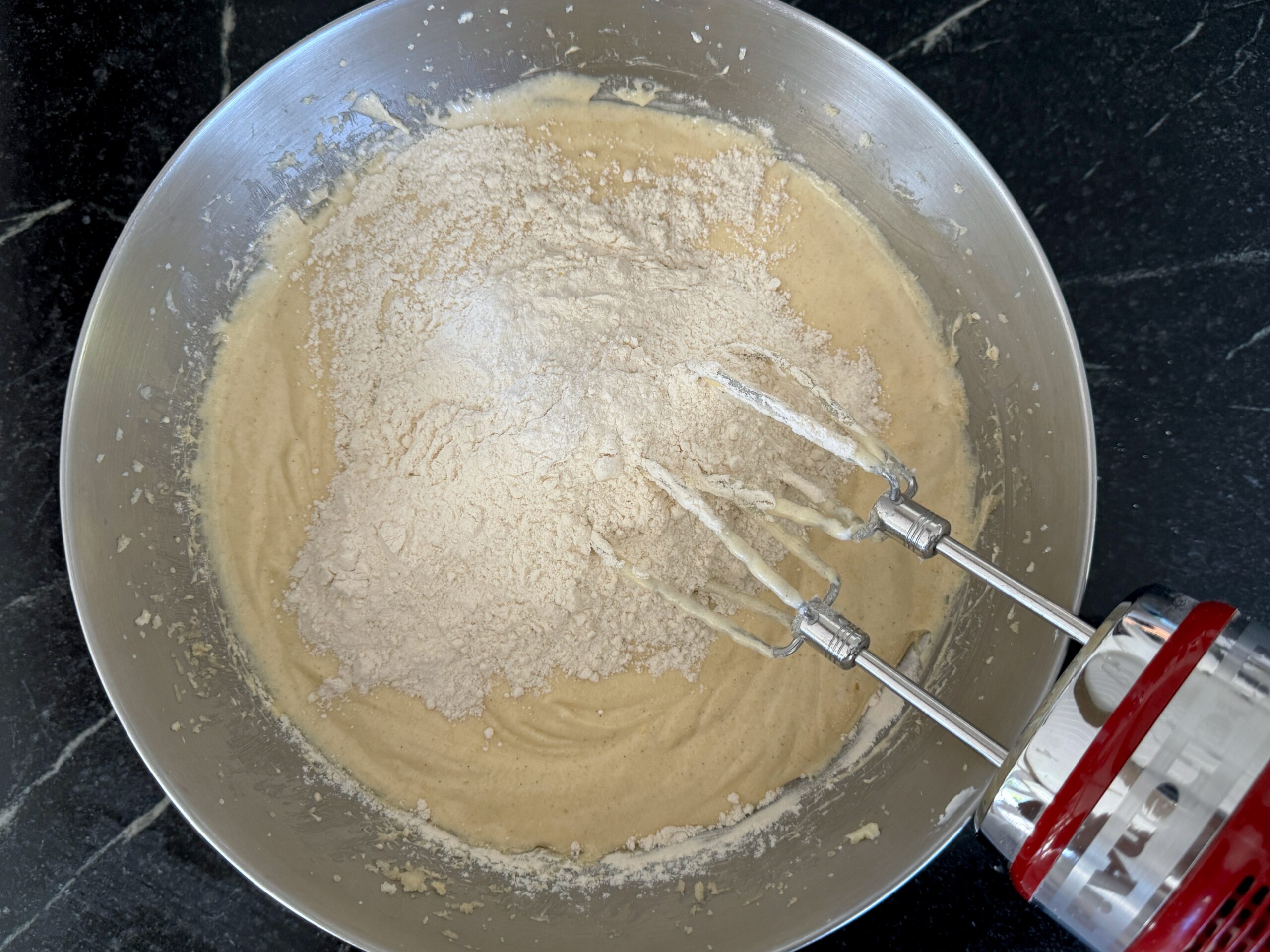
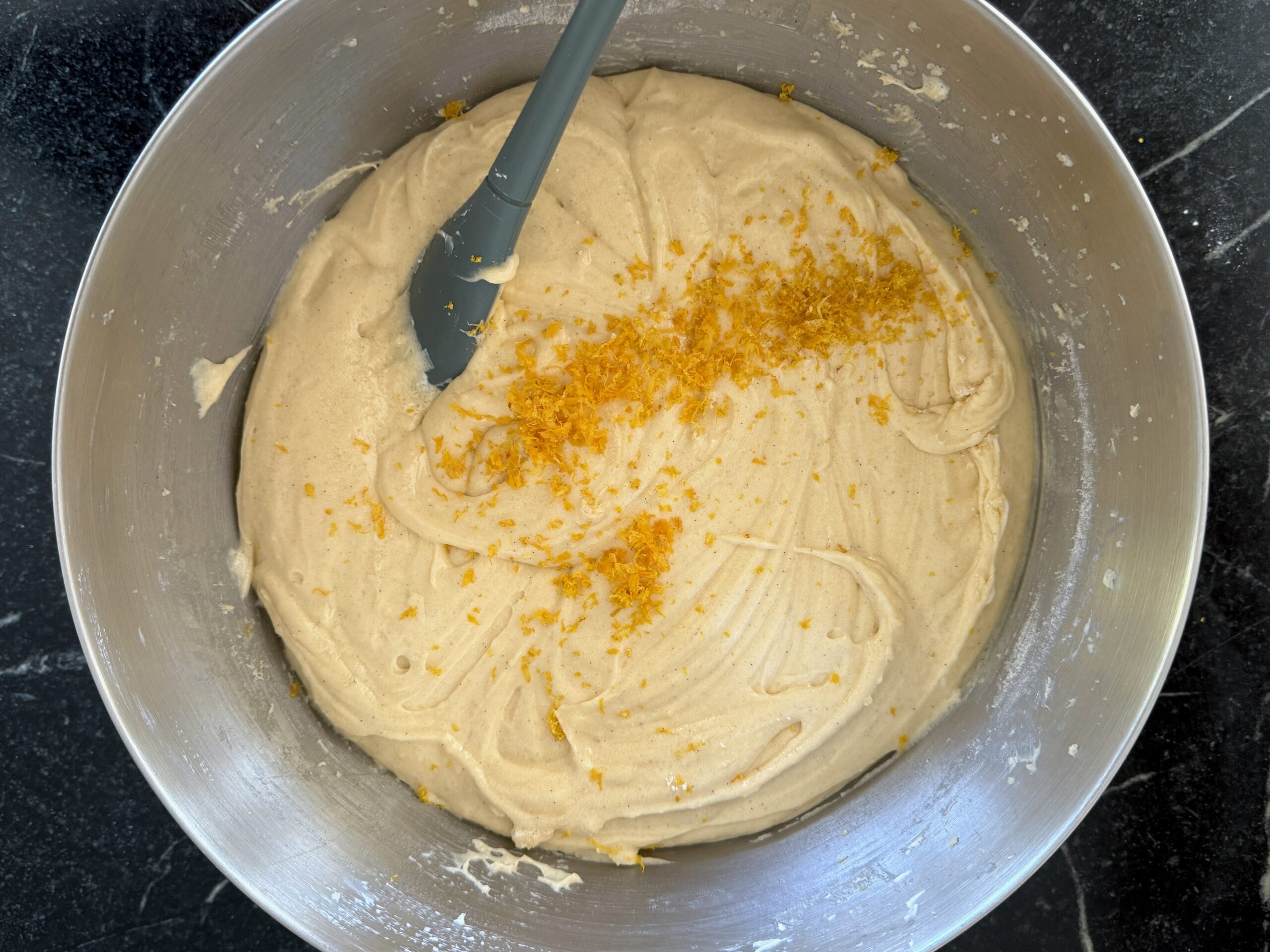
Once you start adding flour, you’ll only mix briefly to incorporate. Start with half the flour mixture, then all the sour cream, then the rest of the dry ingredients. Use a spatula to fold in the lemon zest.
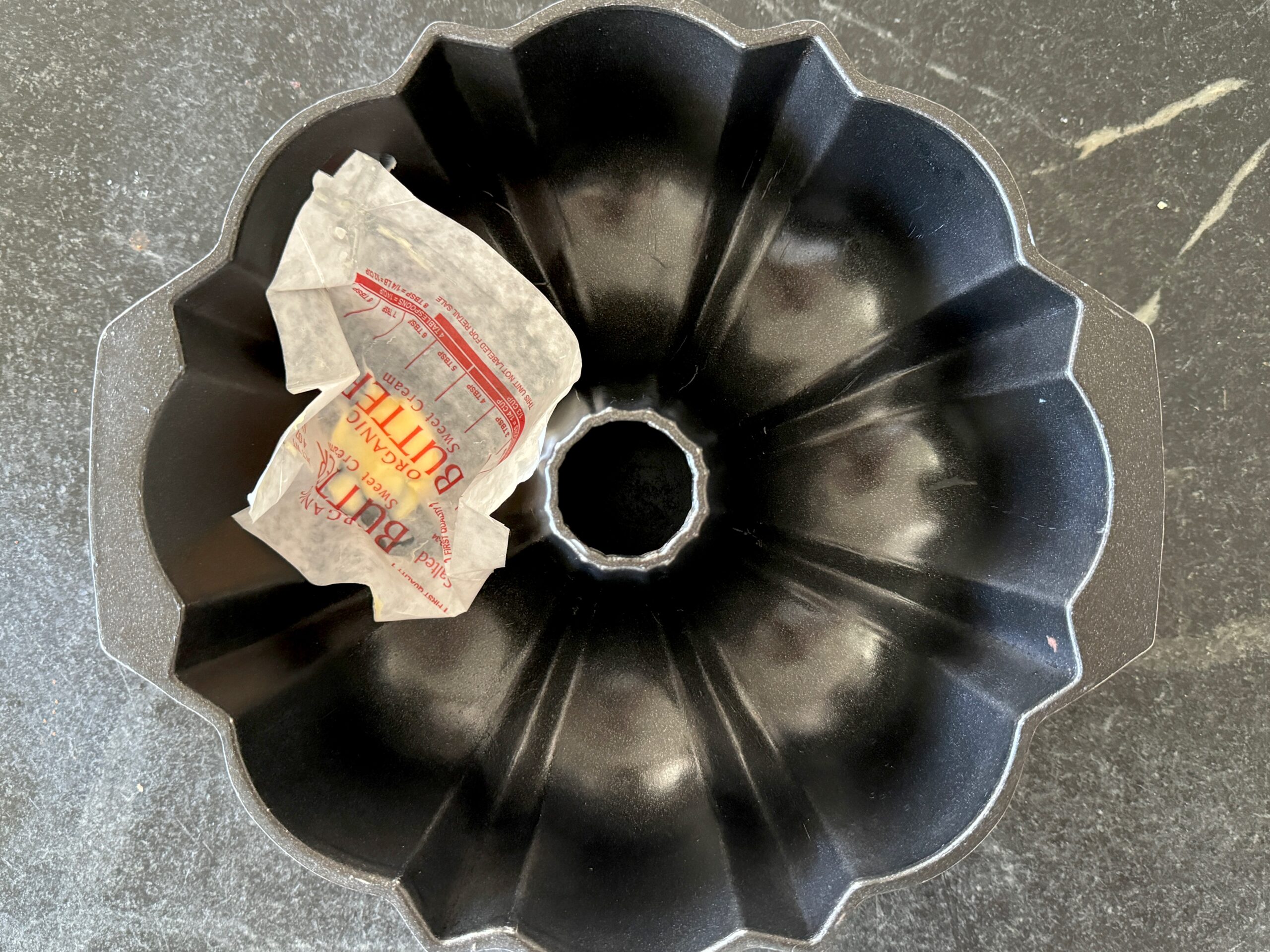
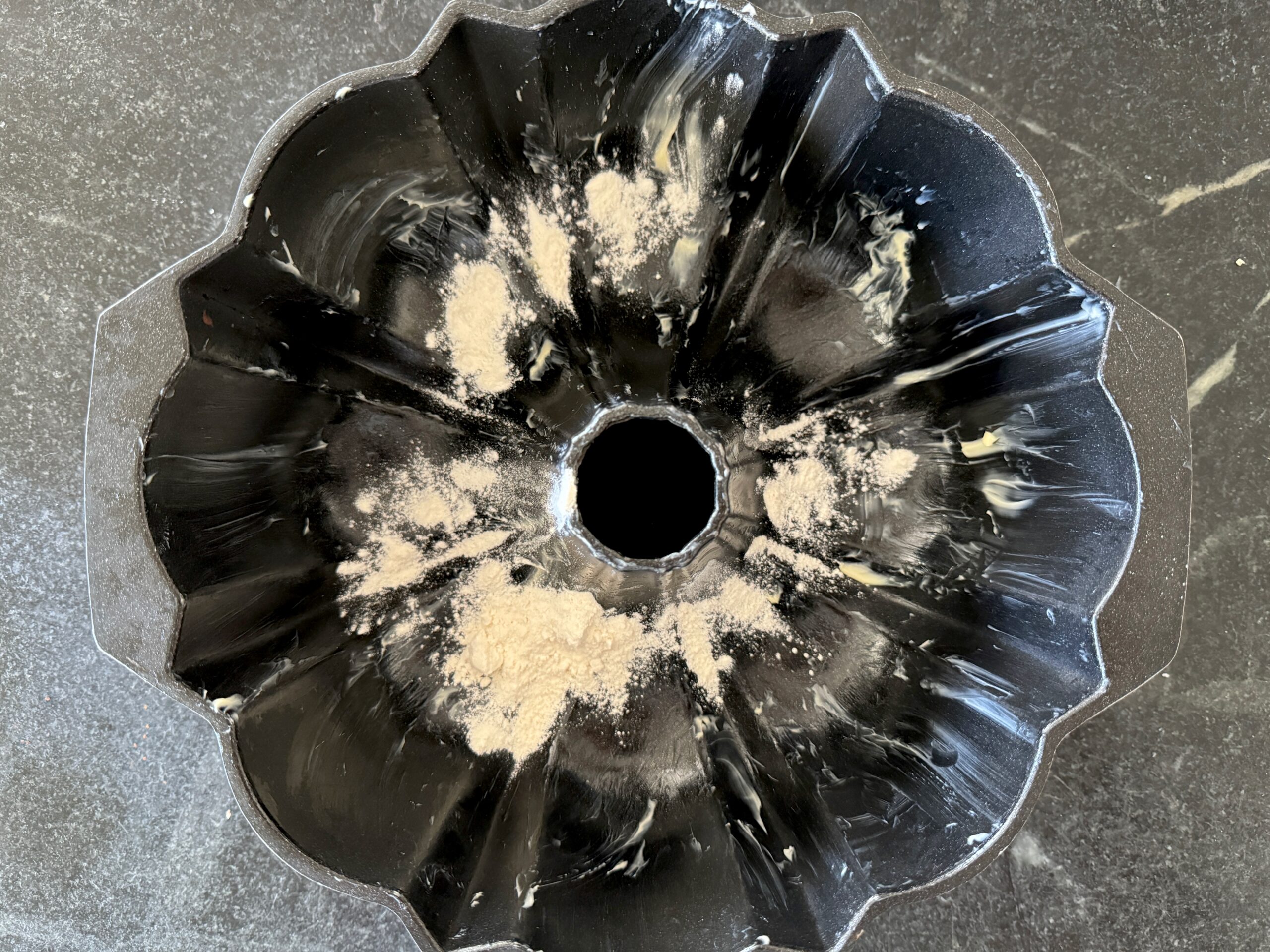
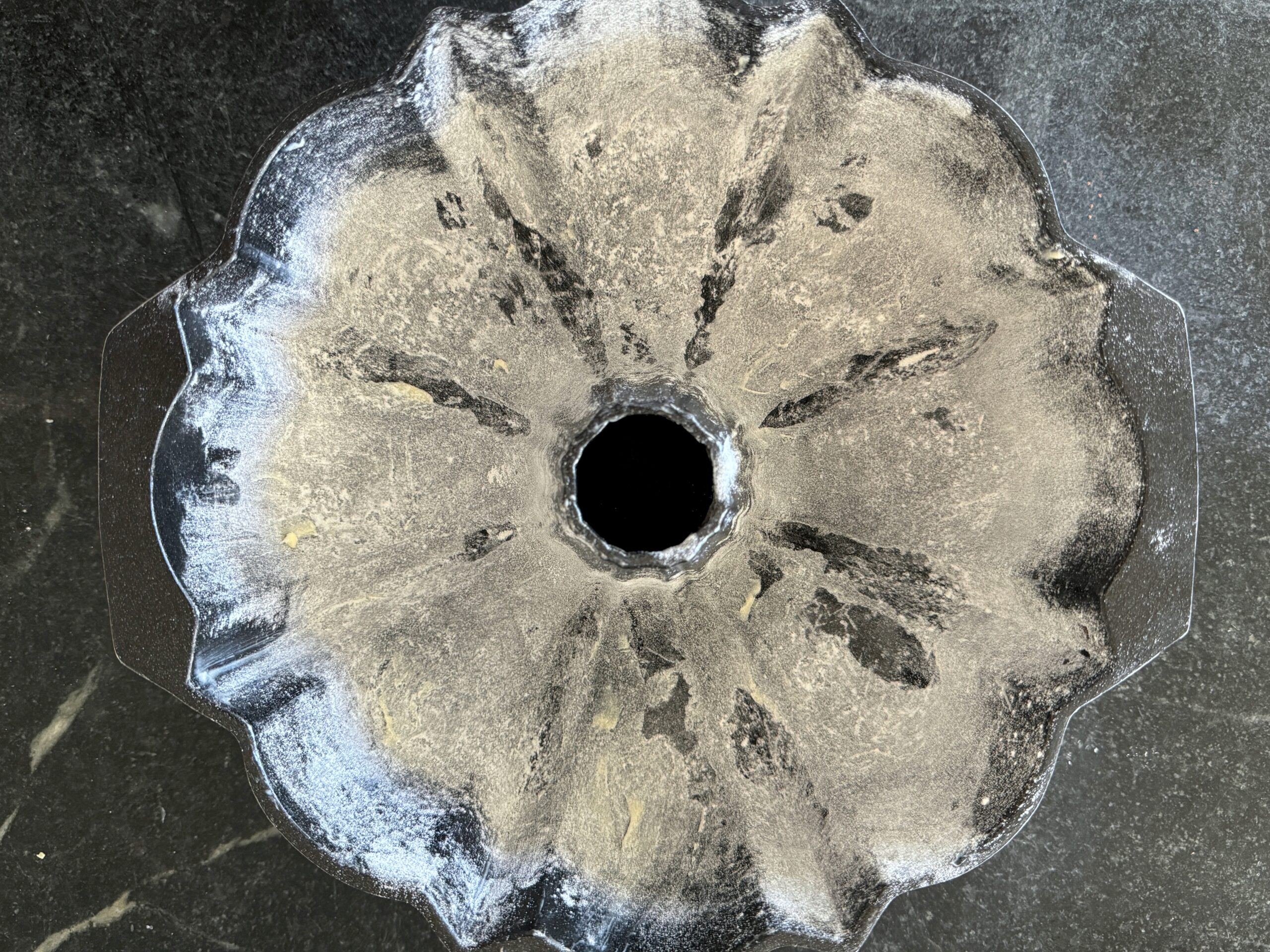
Butter and flour bundt or tube pan. Or you can make two loaves. I always use the waxy butter wrapper to grease the pan, because it doesn’t absorb the butter. To flour the pan, add a bit of flour after greasing the pan. Then tilt and shake the pan to distribute the flour (do this over the sink or a trash can), adding a bit more if needed. At the end, hold the pan upside down and tap it to shake off excess flour.
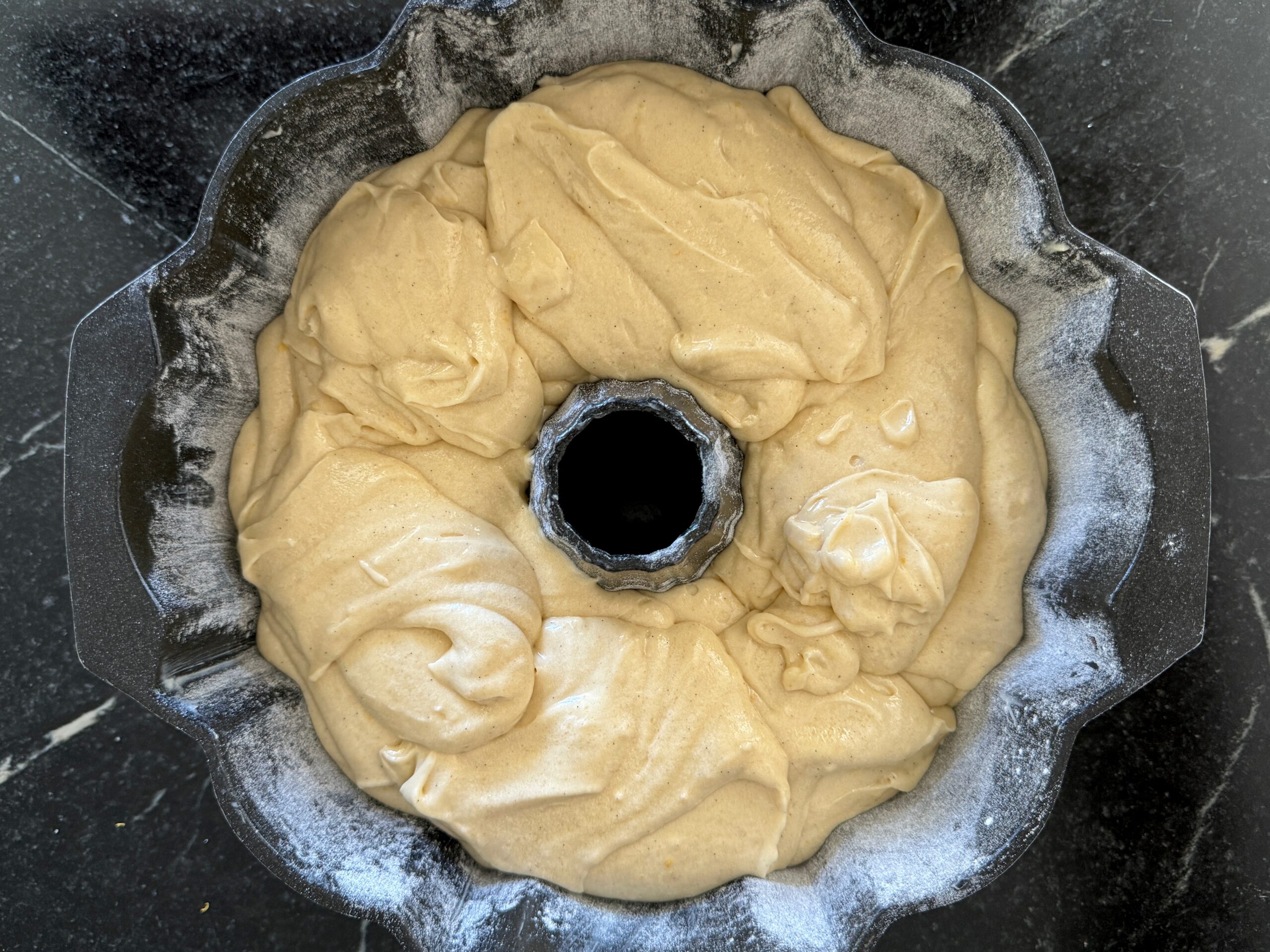
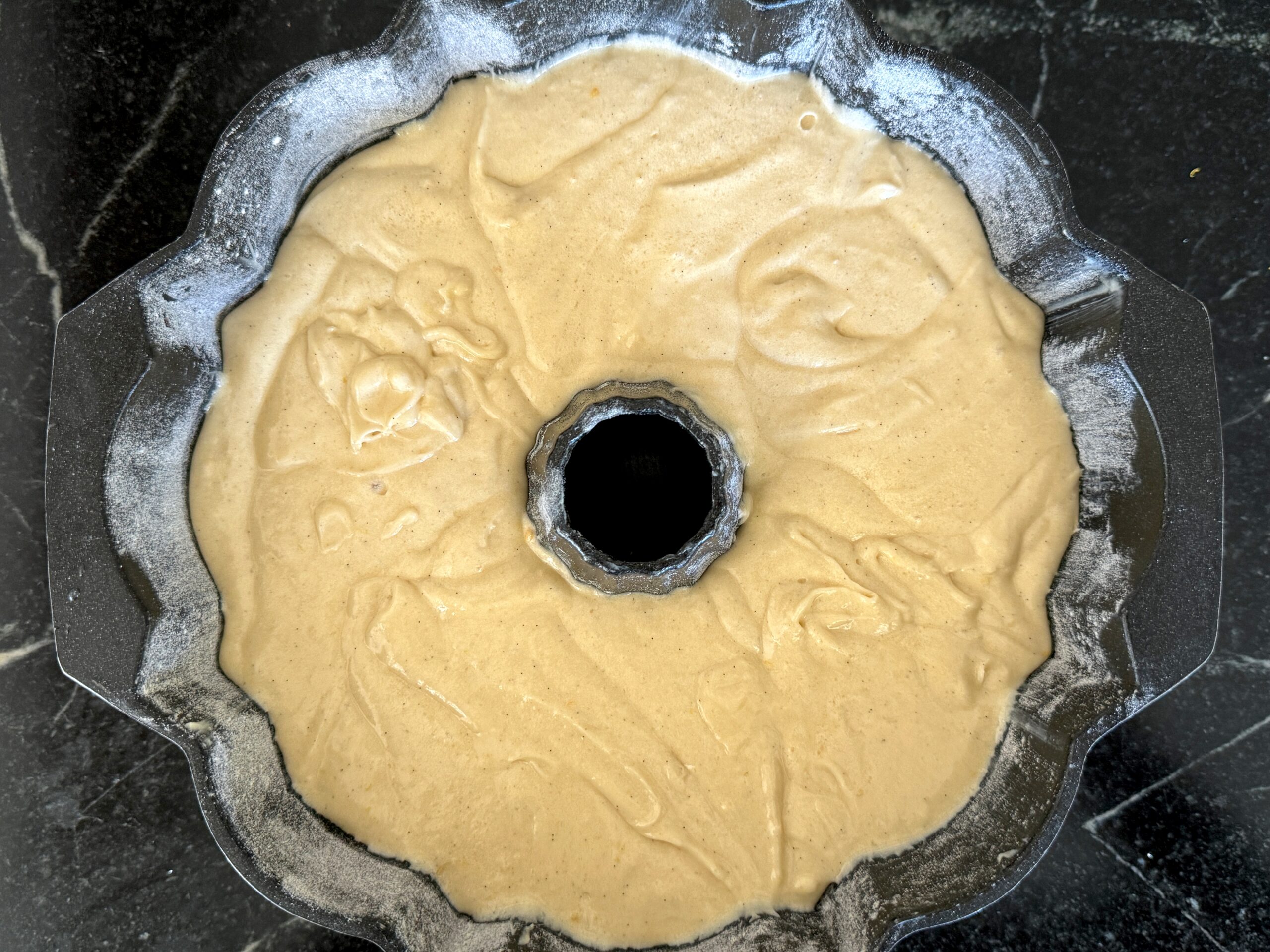
The pound cake batter is so soft and fluffy. Jiggle the pan side to side so that the batter settles down evenly for baking.
One school of thought says to start pound cake in a cold oven, which in theory gives more low-temperature bake time so that the inside of the cake gets a head start before the outside gets too brown. I’ll test that next time. Let the cake cool enough to handle comfortably before using a soft spatula to loosen it from the pan. Don’t forget to loosen around the center hole as well.
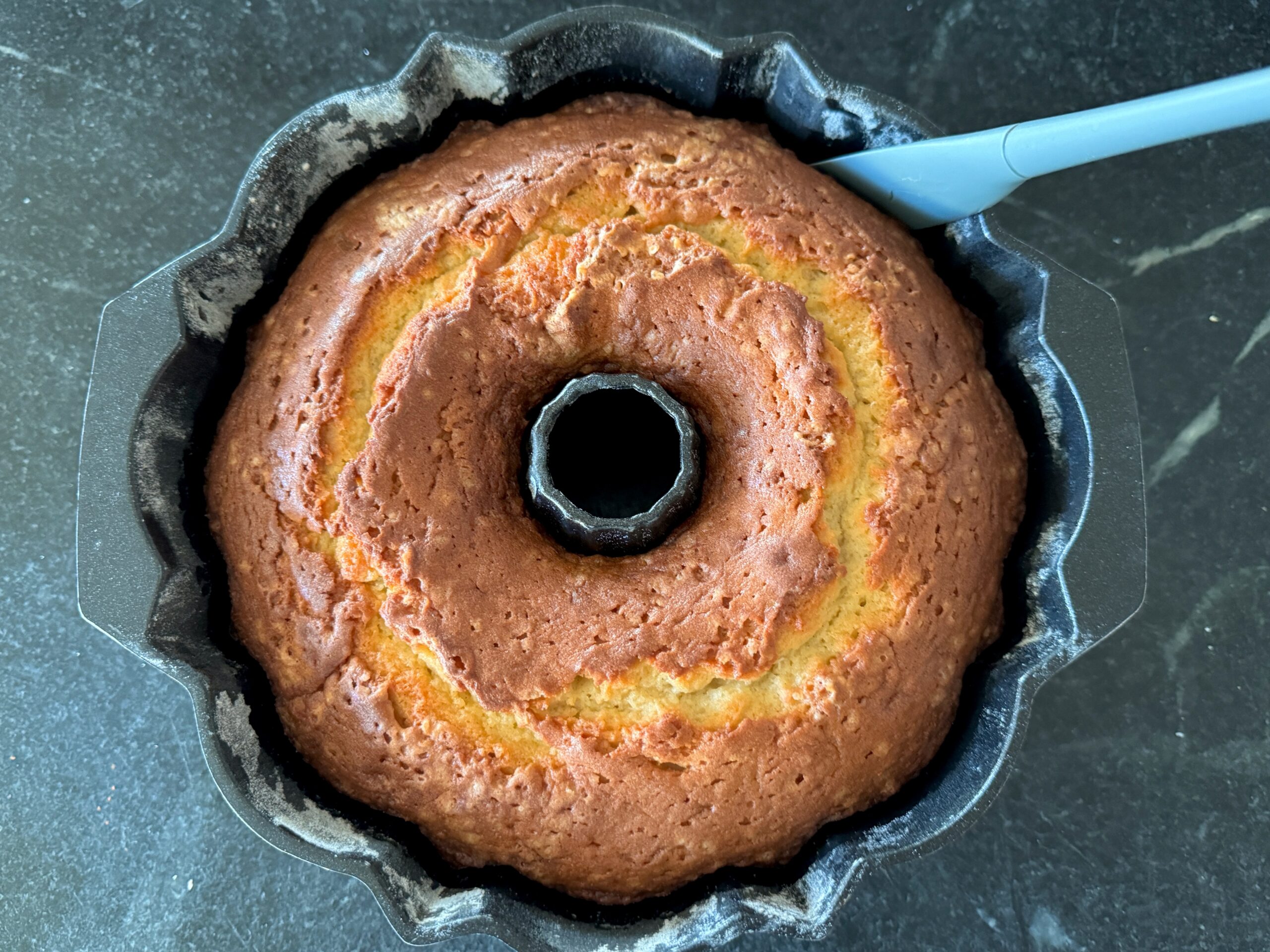
Because of its density, pound cake takes a while to bake fully in the oven. If you have a long wooden skewer, this will work better than a short toothpick to reach the center of the cake to test for unbaked gooeyness.
I think the crust does look darker than might be ideal. Unlike with brownies, no one wants underbaked pound cake.
I like adding a dusting of powdered sugar for prettiness, but it also helps to disguise any mishaps in removing the cake from the pan.
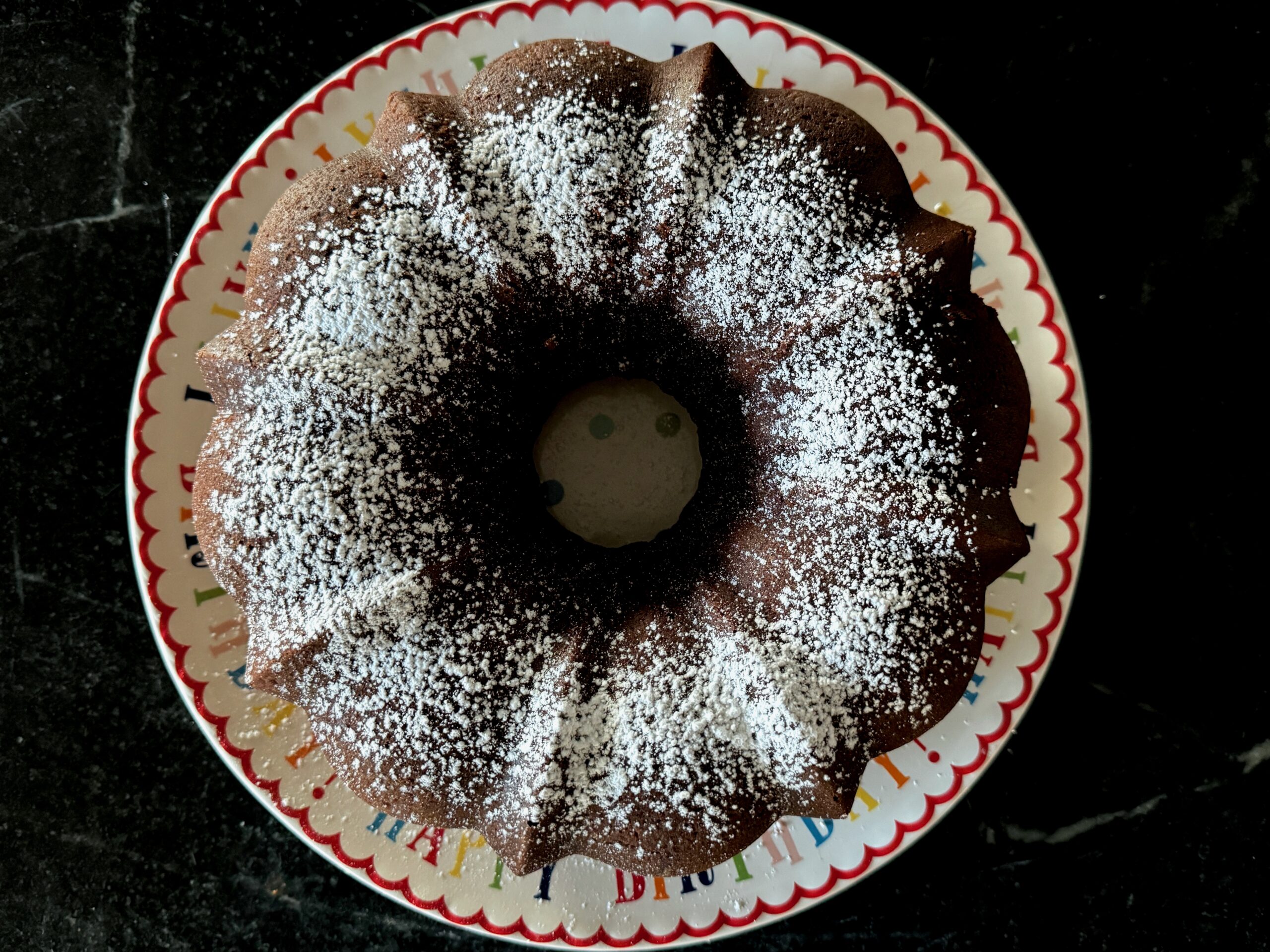
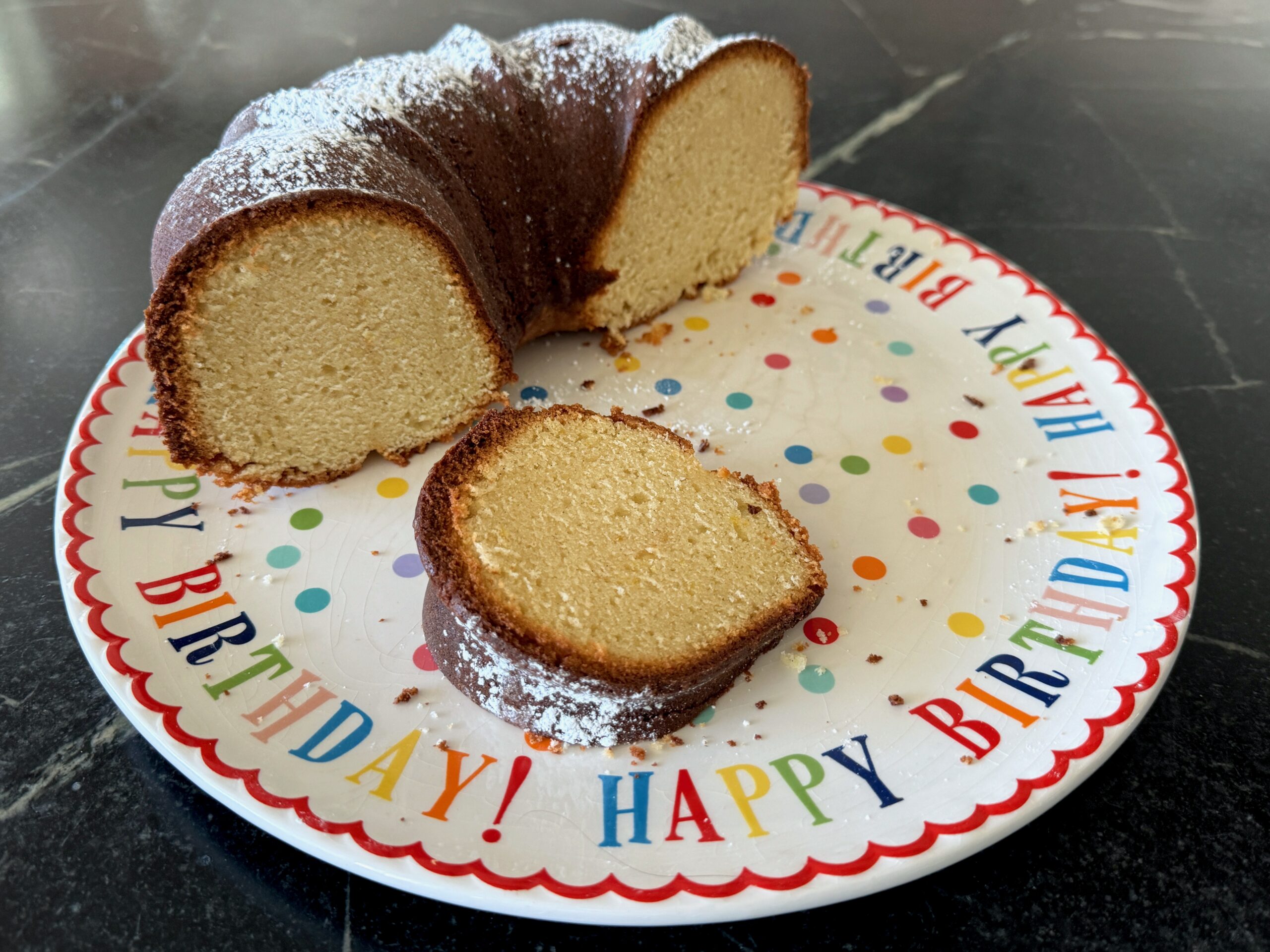
Ready to serve: no frosting, no fuss.
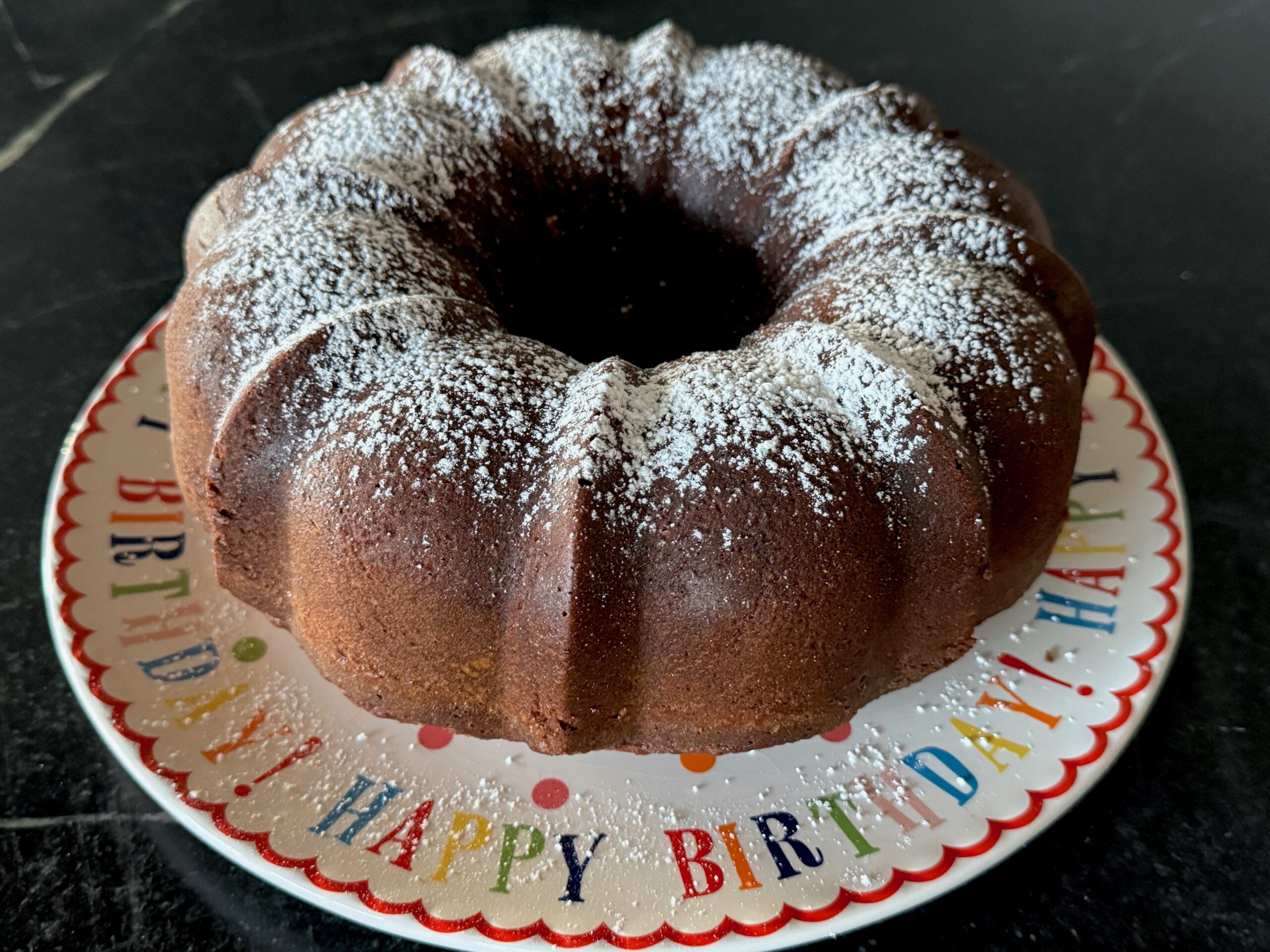
The birthday boy and his friends were very happy.
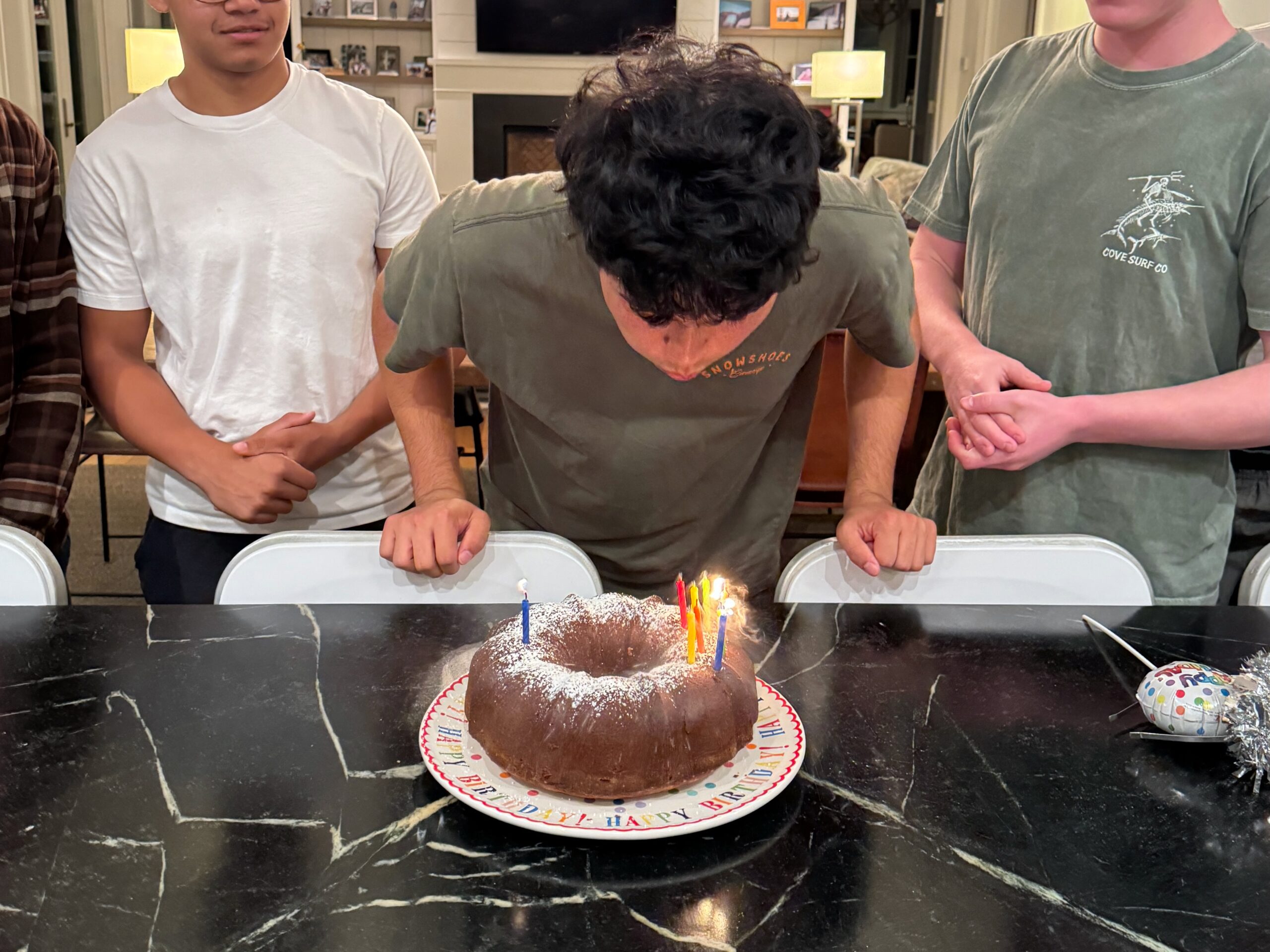
For everyday purposes, using half this recipe for a loaf-sized pound cake is a sensible amount. But on a birthday weekend, a full bundt cake was easily polished off in two days.
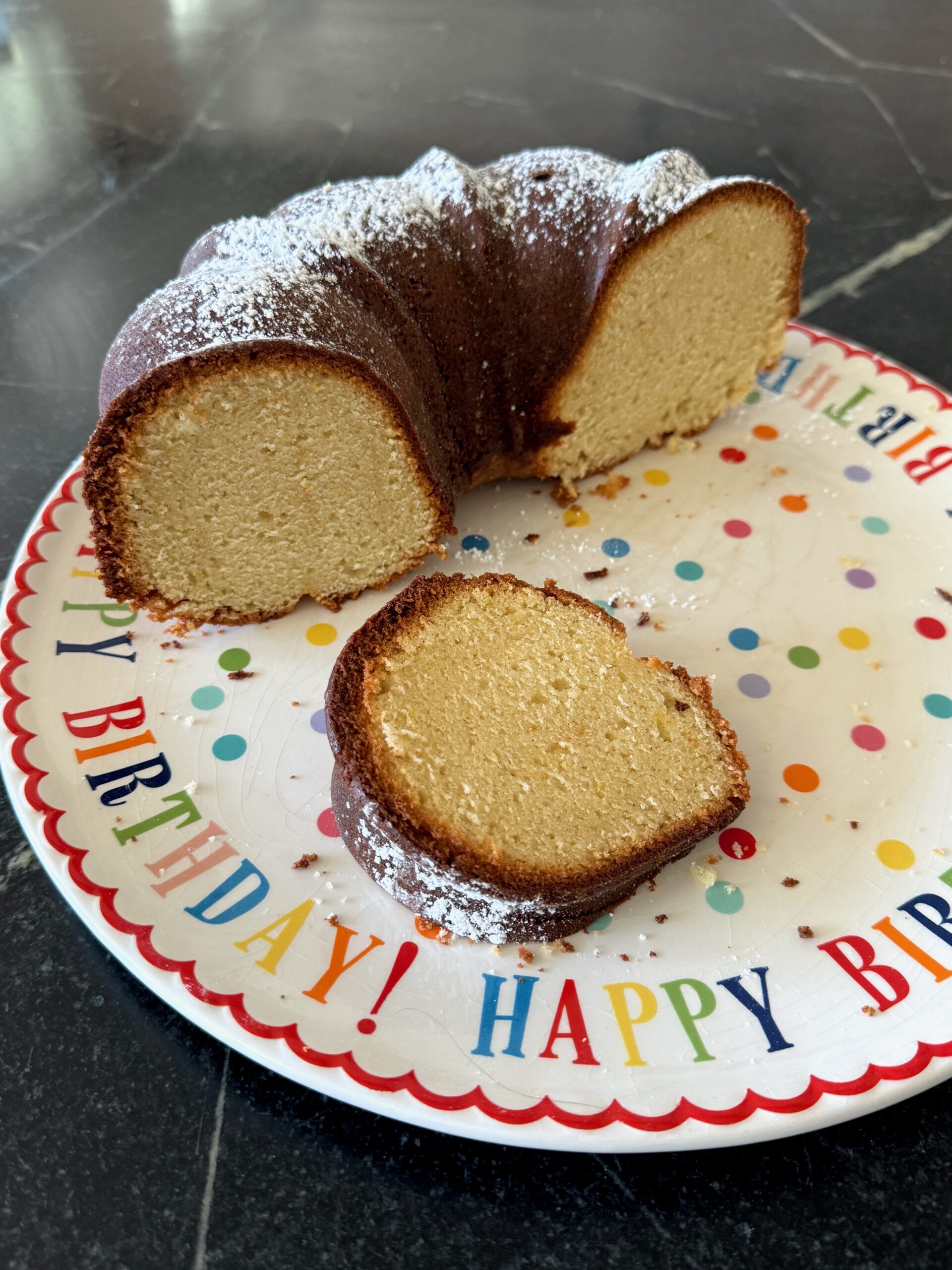
Pound cake Susan
The buttery pound cake of my childhood dreams. This makes a large pound cake in a bundt pan, or it can make two loaves. In the notes I have a half-recipe for those who just want a single loaf.
Ingredients
- 3 cups flour (348 g) – I use all-purpose; some like to use cake flour
- 1/4 teaspoon baking soda
- 1/2 teaspoon salt (1 teaspoon if using unsalted butter)
- 1 cup (2 sticks; 227 grams) butter, softened at room temperature
- 2 teaspoons vanilla extract
- 3 cups sugar (600 g) – could also be fine at 2.5 cups (500 g)
- 6 eggs, at room temperature
- 1 cup sour cream or plain/Greek yogurt (240 g)
- Zest of 1 lemon
Preparation
- Preheat oven to 350 degrees F. Grease and flour 9-in tube or bundt pan (3 1/2 in deep), or two 9″x5″ loaf pans.
- Sift together flour, soda, salt. (Confession: I never do this step.)
- In large mixing bowl, cream butter. Add vanilla, then gradually add sugar. Beat 2-3 min. Add eggs, two at a time, beating thoroughly after each addition and for 2-3 minutes after last addition.
- On lowest speed, add half dry ingredients, then all of sour cream, then balance of dry ingredients, beating only until smooth after each addition. Remove from mixer. Stir in lemon zest.
- Pour batter into prepared pan(s). Level out the batter by jiggling pan briskly back and forth several times. Bake 1 hr 15 minutes, until cake tester comes out dry (a long wooden skewer is best if you have one; a toothpick is too short to reach the center). Cool cake in pan 10-15 minutes. Remove cake from pan and cool completely on rack.
Notes
-
- Proportions for a single loaf: 1 1/2 cups (174 g) flour, 1/8 teaspoon baking soda, 1/4 teaspoon salt (1/2 teaspoon if using unsalted butter), 1/2 cup (1 stick; 113 g) butter, 1 teaspoon vanilla extract, 1 1/2 cups (300 g) sugar, 3 eggs, 1/2 cup sour cream or plain/greek yogurt (120 g), zest of 1/2 lemon
Here’s the link to a printable version.

So happy that you are back! I started following you back in the mid 2010s when I was single and living and working in NYC and have always enjoyed your writing and insights (for cooking and life, both). Now I am in my late 30s with a young child and still find myself coming back to reference some of your easy and foolproof recipes. Welcome back!
aww thank you mary! i love that we have been on this journey together all this time! i appreciate you so much. XO
i am so happy. CHINESEGRANDMA IS BACK.
😘❤️🥰
Love this recipe ! I used a loaf pan and Bundt intimidates me
hi lulu – good for you, loaf pan is classic! thank you for joining me in the pound cake party!